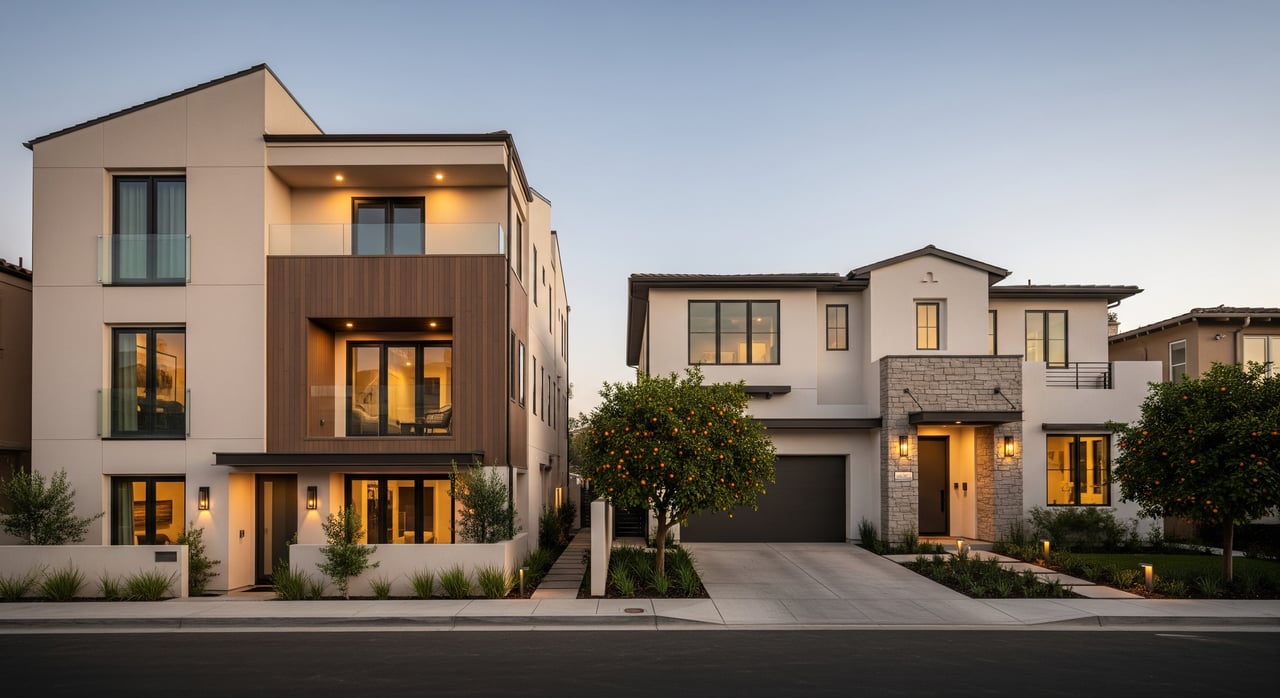
Irvine Townhome vs Single-Family: True Costs and Resale
Thinking about buying in Irvine but torn between a townhome and a single-family home? You’re not alone. Each option carries a different mix of upfront price, monthly costs, and long-term resale potential. This guide breaks down what truly matters in Irvine, so you can compare your total cost of ownership and understand which choice aligns with your lifestyle and exit strategy. Let’s dive in.
In Irvine’s master-planned market, single-family homes often command higher prices because of the private land and larger lots. Townhomes are typically the more affordable entry, but values vary by village, age, finishes, and amenities. To benchmark today’s spread, pull 12-month median sold prices and price-per-square-foot for both types from your local MLS and compare 3 to 5-year trends. Also factor in closing costs like escrow, title, and any supplemental assessments tied to new construction or recent improvements.
California’s Prop 13 sets your base property tax at about 1 percent of the purchase price, then adds local assessments approved by voters. In many newer Irvine villages, Community Facilities Districts (often called Mello-Roos) add an annual charge that can materially change your monthly budget. Always check the Orange County Assessor’s parcel report for special taxes before you write an offer.
Townhomes usually include monthly HOA dues that cover exterior maintenance, landscaping, building insurance through a master policy, and sometimes utilities. Single-family homes may have lower or no HOA dues, but you take on exterior upkeep, yard care, and long-term replacements like roofing and fencing. Review the HOA’s budget and reserve study to assess the likelihood of special assessments. Healthy reserves and transparent financials reduce risk and support resale.
Single-family owners typically carry an HO-3 policy that insures the structure and exterior. Townhome owners usually carry an HO-6 policy that covers the interior and personal property because the HOA’s master policy insures the building and common areas. Ask for the HOA’s certificate of insurance and clarify coverage limits, deductibles, and any gaps that could lead to owner assessments after a loss. Align your personal policy to fill those gaps.
Single-family living often means higher variable costs and more hands-on maintenance for landscaping, irrigation, and exterior care. Townhomes convert some of that variability into predictable dues, which can simplify budgeting. To compare apples to apples, create a monthly estimate that includes utilities, a maintenance reserve, and any HOA fees.
If you plan to use FHA or VA financing on a townhome, confirm the project’s approval status early. Some lenders require condo project approvals or apply extra underwriting standards. Appraisers for townhomes typically prioritize comparable sales within the same project or nearby townhome communities. This can limit valuation flexibility in areas with few recent comps.
Single-family properties generally offer broader loan program access, including jumbo financing. Appraisals weigh land and lot size heavily, which can support value in land-constrained markets. Regardless of property type, review lender overlays, condo questionnaire results, and any project litigation or insurance issues that could delay closing.
In HOAs, master policy deductibles, coverage types, and fidelity insurance all matter. Clarify how losses are handled, when owners can be assessed, and whether the HOA carries adequate coverage for common areas. Solid documentation helps prevent surprises during escrow and protects resale.
Over time, land scarcity tends to support appreciation for single-family homes. In Orange County, where buildable land is limited, the private lot and yard often carry a premium. This land component can compound during hot markets, though short-term volatility still depends on overall demand and supply.
Proximity to major employers and lifestyle hubs is a core driver across product types. Irvine’s access to UCI, the Irvine Spectrum, medical centers, and John Wayne Airport supports demand for both townhomes and single-family homes. Community identity within villages like Woodbridge, Turtle Rock, Northwood, Portola Springs, Orchard Hills, and Great Park also shapes buyer interest. School attendance boundaries can influence value, so verify assignments if they matter to your plans.
Townhomes can sell faster at certain price points thanks to affordability and low-maintenance living that appeals to first-time buyers, downsizers, and investors. In strong seller markets, single-family homes often record larger percentage gains because of the land factor. Track days on market and sale-to-list ratios for both property types over the past 12 months to see which segment is hotter right now in your target villages.
Irvine’s villages feature varying HOA structures, amenities, and design standards. Newer neighborhoods often include community amenities and enhanced landscaping, which can increase dues and Mello-Roos. Older villages may offer lower special taxes with a different maintenance profile. Match the community’s lifestyle and cost structure to your budget and plans.
California’s Davis-Stirling Act governs common interest developments and lays out rules for disclosures, reserve funding, and financial reporting. Strong HOA governance, transparent communication, and adequate reserves support stable ownership costs and better resale. Litigation, chronic water intrusion, or deferred maintenance in older projects can create friction for both financing and resale.
Short-term rental rules in Irvine and HOA restrictions can limit rental flexibility. If investment potential matters, verify rental caps, lease minimums, and any city-level regulations. Investor demand often favors townhomes near employment centers or campuses, but single-family homes can capture premium rents, especially with yard space or ADU potential.
Use this simple framework to normalize your monthly cost and resale outlook:
| Category | Townhome | Single-family |
|---|---|---|
| Upfront price | Often lower entry price | Higher due to land and lot size |
| Monthly costs | HOA dues plus HO-6; some maintenance included | HO-3, no or lower HOA; higher variable maintenance |
| Taxes | Base rate plus local assessments; CFDs common in newer areas | Same tax framework; impact varies by village and lot |
| Financing | Confirm project approvals and lender overlays | Broad program access, including jumbo |
| Resale drivers | Affordability, low maintenance, proximity to jobs, HOA reputation | Land and lot size, yard, ADU potential, storage, school boundaries |
| Risk factors | Special assessments, litigation, reserve shortfalls | Higher maintenance exposure over time |
Choose a townhome if you value a lock-and-leave lifestyle, predictable dues, and proximity to employment hubs at a more approachable price point. Choose a single-family home if you prioritize private outdoor space, long-term flexibility, and the land component that can support appreciation in supply-constrained Orange County. Your best choice depends on your budget, maintenance preferences, and exit horizon. A data-driven comparison of current Irvine comps and carrying costs will make the answer clear.
If you want a private, neighborhood-by-neighborhood analysis for Irvine villages you’re considering, connect with the Christina Shaw Group for precise comps, carrying cost models, and a tailored resale strategy.
Stay up to date on the latest real estate trends.
Buying or selling a home? Contact us now by filling out the contact form below and we will get back to you soon. Looking forward to speaking with you!