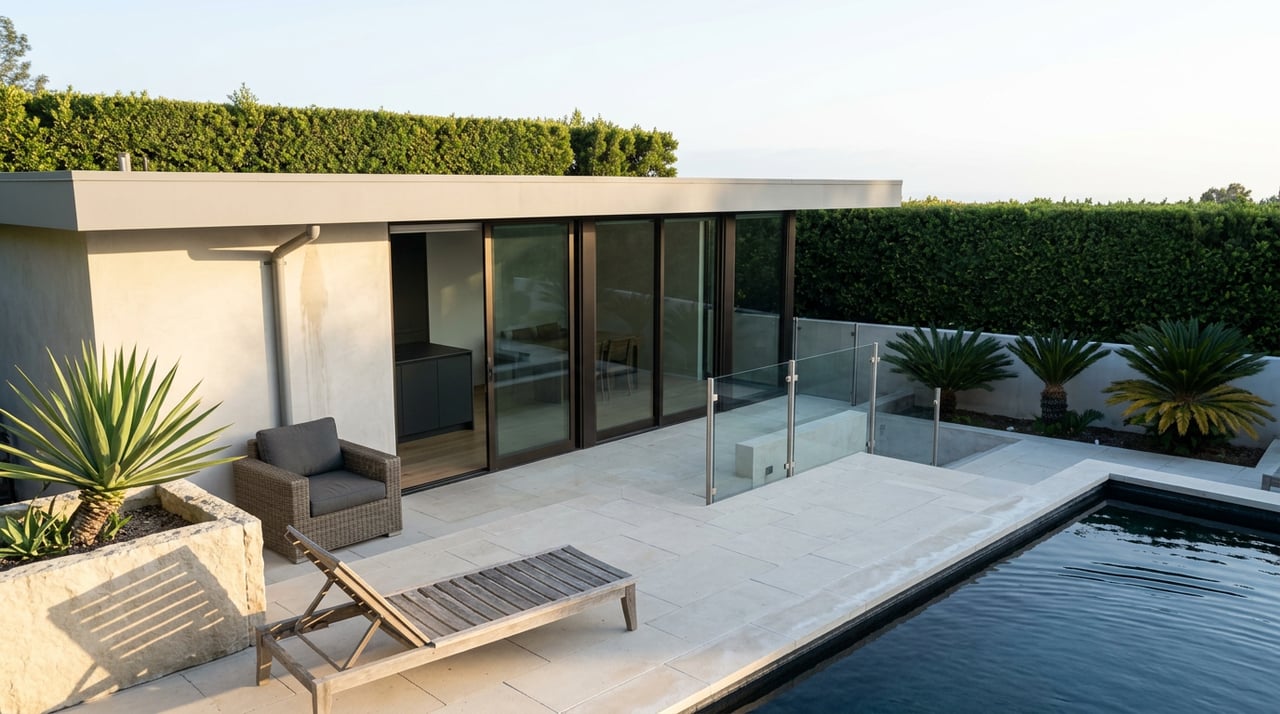
Laguna Beach View Preservation Ordinance: What Your View Protection Covers
As Citizen Portal reported, in April 2026 the Laguna Beach City Council heard an appeal over a hedge. The dispute sat between two houses and had been building since at least 2022, when a homeowner first documented that her neighbor's ocean horizon view was disappearing behind a growing wall of Eugenia. The appellant argued the claimant had used unusual photo angles and that no ordinance should force her to cut back a hedge she'd tended for years. The council disagreed. It upheld a hearing officer's order: trim the hedge to a height between 10 and 11 feet, restoring the sightline that had been slowly swallowed.
That case is a clean example of a city process working exactly as designed. It's also a preview of the gap most buyers never see coming. The ordinance that settled the dispute has real teeth, but it only reaches one kind of threat to a view. The other kind, a neighbor's future addition, a second story pulled legally through design review, sits entirely outside its reach. If you're paying a premium for a Laguna Beach view, understanding that split matters more than almost anything else on the disclosure sheet.
Laguna Beach's View Preservation and Restoration ordinance is codified in Municipal Code Chapter 12.16. The ordinance gives property owners a structured way to document a view and, if necessary, force a neighbor to cut back trees or hedges that have grown into it over time.
What the ordinance does not touch is structures. If a downhill neighbor pulls a permit for a second-story addition and the Design Review Board signs off, that addition can block your ocean view completely and Chapter 12.16 offers you nothing. A buyer who assumes the view protection extends to everything built or planted around them is working from a false premise, and that premise gets expensive the first time a lot below them changes hands.
The city runs two distinct processes under Chapter 12.16, and the order you use them in has permanent consequences.
View Preservation lets a property owner document an unobstructed view before anything is wrong. City staff visit the property, take standardized photographs from the owner's chosen vantage points, and file that record as a benchmark.
View Restoration is the process used when a view has already been blocked.
Here's the detail that surprises almost everyone: if you file a View Preservation record first, you forfeit the ability to later file a View Restoration claim for that same view. The city's own guidance states it plainly. Once you've locked in a preservation benchmark, that benchmark is what you're protecting going forward, not a broader right to demand restoration of something beyond it. Sequence isn't a formality here. It's the whole strategy.
A View Restoration claim isn't available just because a tree has gotten tall. The ordinance limits who can file and against what. Under the Laguna Beach Municipal Code, the vegetation in question has to be six feet or taller, and the property it sits on has to be within 500 feet of the claimant's boundary. And if the remedy sought is complete removal without the vegetation owner's consent, the claimant must have sent at least five written notifications to the vegetation owner over a period of at least three years before filing.
That last requirement is worth sitting with. A three-year documentation trail, sustained across multiple written notices, is not something a new owner can manufacture after closing. If you buy a home with a partially blocked view and hope the ordinance will bail you out quickly, the math doesn't work in your favor. The process rewards owners who started documenting long before they needed to file anything.
This is where the financial stakes come into focus. A listing photo may show an earlier, more expansive view or a different angle than what you see at closing.
That's why filing a Record of View before close of escrow, or immediately after, is the single most useful thing a buyer of a view property can do.
Some of Laguna Beach's most view-driven real estate sits inside Three Arch Bay, the guard-gated enclave that straddles Pacific Coast Highway with private beach access at Mussel Cove. Three Arch Bay has its own municipal zoning chapter, 25.44, written specifically to preserve the community's ocean views through stricter mass, scale, and height standards than the citywide R-1 zone. On top of that, the Three Arch Bay zoning code says the Three Arch Bay Association reviews remodel plans before the city does and submits its own letter of comment.
As reported by the Laguna Beach Independent, a 2022 dispute inside the community shows how that extra layer plays out in practice. A homeowner couple pursued a remodel that both the neighbor next door and the Association appealed, arguing it would affect light, privacy, and a sunset view. The Design Review Board had approved the project 4 to 1. The City Council sent it back for another look. During the hearing, the homeowners' attorney argued that ultimate permit authority rests with the city, not the Association, a position the Association's own attorney did not dispute. The project moved forward through additional design review rather than through the Association's private process alone.
The takeaway for a buyer isn't that HOA review is meaningless. It's that in Three Arch Bay, a remodel or addition can face two separate layers of scrutiny, city and association, and the association's objection carries weight without carrying final say. If you're buying a view lot inside the gates, ask for the Association's architectural guidelines during your inspection period, not after you're already in contract.
Laguna Beach's median sale price sat at roughly $3.1 million over the three months ending in May 2026, and the premium tied to an unobstructed ocean view is one of the largest single drivers inside that number. Inventory has stayed tight into September 2026, with active listings pulling back and homes that do sell moving noticeably faster than they were a few weeks earlier. In a market where view lots command that kind of premium and turn over quickly once priced right, the legal status of the view itself deserves the same scrutiny as square footage or lot line.
Before writing an offer on a hillside or bluff property, ask whether a Record of View is already on file for the property and, separately, for the lots below it. Ask whether any View Restoration claims, active or resolved, involve the parcel. Pull a permit history to see what's already been approved on neighboring lots, since a pending or recently approved second story downhill can matter more to your future view than any tree ever will. And if the property sits inside Three Arch Bay or another association-governed enclave, request the community's design guidelines before your inspection period closes, not after.
None of this makes a Laguna Beach view a bad investment. It makes it an asset with a specific legal shape, protected in some directions and completely exposed in others. Buyers who understand that shape negotiate from a position sellers respect. Sellers who understand it can document their view's status before marketing it, turning an assumption into proof.
Does the view ordinance protect me from a neighbor building a second story? No. Chapter 12.16 governs vegetation only.
Is filing a Record of View worth doing if my view already looks safe? Generally yes, and earlier is better than later.
A Laguna Beach view is one of the most valuable things you can buy on this coast, and one of the least understood legally. If you're evaluating a hillside or bluff property, or preparing to list one, Christina Shaw Group can walk through the specific view history, permit record, and association layers tied to that parcel before you write or accept an offer. Request a Private Valuation to start that conversation.
This article is general information, not legal, tax or financial advice. Consult a qualified professional about your situation.
Stay up to date on the latest real estate trends.
Buying or selling a home? Contact us now by filling out the contact form below and we will get back to you soon. Looking forward to speaking with you!