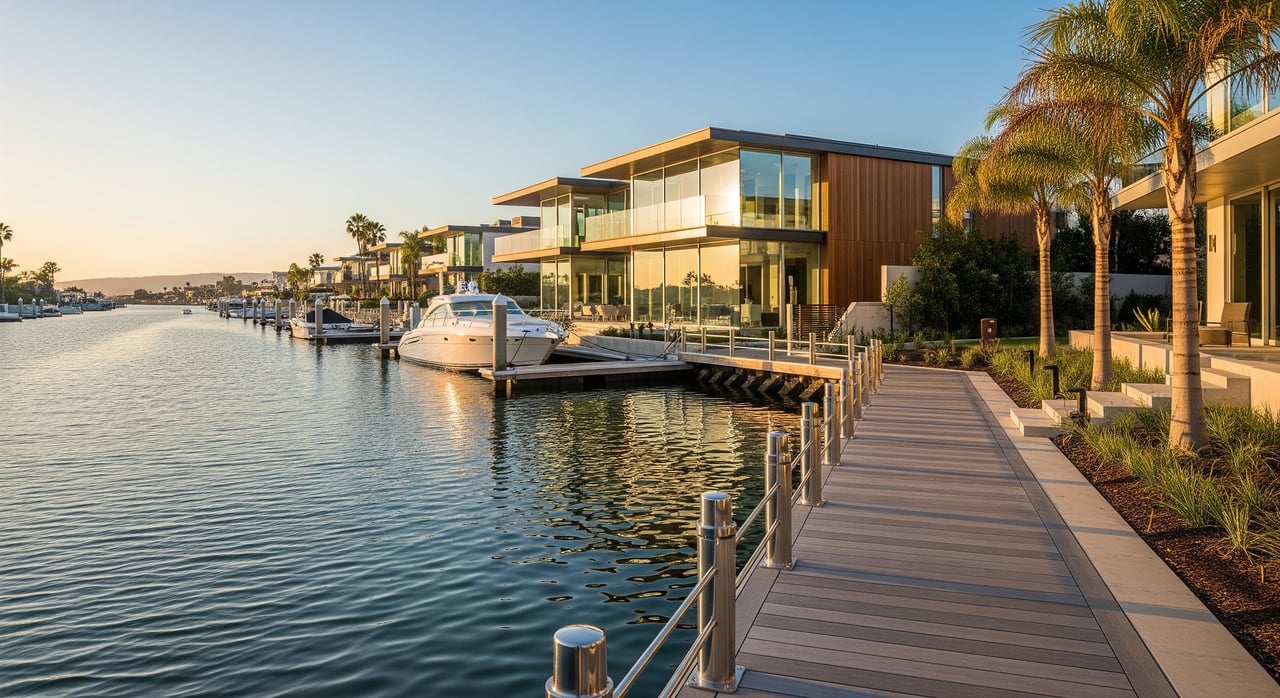
Your Guide to Huntington Harbour Waterfront Living
Imagine stepping from your kitchen to your own dock as the sun rises over calm canals. If you are drawn to boating, paddleboarding, and easy access to coastal amenities, Huntington Harbour can feel like a dream. Buying on the water is different from buying inland, though. In this guide, you will learn how docks work, what to inspect, which permits matter, and the costs to plan for so you can buy with confidence. Let’s dive in.
Huntington Harbour is a planned waterfront community in Huntington Beach with navigable canals, residential islands and peninsulas, and homes that range from townhomes to large single-family properties. Many residences have private docks or access to community slips. You also enjoy proximity to beaches, bike paths, local dining, and the Bolsa Chica Ecological Reserve.
Waterfront homes usually command a premium over nearby non-waterfront properties. That premium varies by lot, dock ownership, home condition, and exact micro-location. Inventory is limited and the buyer pool is specialized, which can affect appraisal and negotiations.
Many canal-front homes include private docks with small boat slips. This setup appeals if you want direct access for a powerboat or sailboat. Confirm the slip’s size, permitted boat type, and depth at low tide before you write an offer.
Townhomes and condos may offer shared docks or community-managed slips. Rules, fees, and availability vary by association. Ask for current slip policies and waitlists early in your search.
Some homes sit within the harbor neighborhoods without direct water access. These can place you close to the lifestyle at a different price point. You still benefit from nearby amenities, clubs, and harbor community services.
Dock rights are not one-size-fits-all. Deeded vs licensed slips is the key distinction. A deeded slip runs with the parcel, while a licensed slip is granted by an association or public body and may be revocable or subject to renewal.
Confirm the slip’s ownership type, transferability, and any conditions that apply. Verify usable length, beam, and water depth at mean low tide, and check for bridge or clearance limits that could restrict boat size. Review rules on boat types, mooring, liveaboards, and any commercial use restrictions.
Ask who pays for dock and bulkhead upkeep, and how dredging costs are handled. Request recent dredging history and any planned projects, since cost allocations can change over time.
Waterfront real estate benefits from specialized support. Consider engaging:
Start your due diligence as soon as you are serious about a property. Ask for:
Focus inspections on systems and structures that interact with saltwater and tides. A thorough approach can prevent surprises.
Most shoreline and dock work requires permits. The City of Huntington Beach handles many building and planning approvals. Projects below the mean high tide line may also require county, state, or federal approvals. Depending on scope, you may need reviews from state coastal authorities and in some cases federal agencies.
Many harbor or marina associations have their own rules for dock modifications, boat sizes, and operations. The harbor’s proximity to protected habitats can add specific constraints or mitigation requirements. Verify all permits and approvals for any prior work and confirm that no violations are outstanding.
If the property lies within a FEMA Special Flood Hazard Area, most lenders will require flood insurance. Even if it does not, many buyers still choose to carry it. Coastal exposure can also affect homeowner premiums and coverage terms for wind and salt corrosion. Earthquake insurance is separate and common in California.
Waterfront properties often involve jumbo financing due to price points above conforming limits. Appraisals can be complex because of unique features like deeded slips, depth, and boat restrictions. Work with a lender and appraiser who understand waterfront valuation and flood-related requirements.
Budget for ownership beyond your mortgage. Review:
Consider environmental and regulatory risks. Flooding and storm surge are possible during extreme tides and storms. Sea-level rise can affect water levels and frequency of flood events over time. Localized erosion and scour can impact seawalls and docks. Water quality alerts, especially after heavy rain, may limit recreational use. Regulatory changes may influence costs and permitted uses.
You can reduce risk with practical upgrades. Options include:
The harbour lifestyle centers on boating, paddlecraft, and outdoor living. You are close to beaches, shops, dining, and community clubs. It is a unique coastal experience.
There are trade-offs. Weekend boating can bring more noise and activity, especially near public access points and parking. Dock lighting from neighbors may affect privacy and nighttime views, though many CC&Rs regulate fixtures. If you are considering short-term rental use, verify city ordinances and HOA rules before you buy.
For safety, review tsunami and evacuation maps and understand local emergency guidance. Confirm fire and rescue service coverage in your area of interest.
Waterfront purchases reward careful planning. You deserve guidance that is clear, thorough, and tailored to your goals. Our boutique team combines local Orange County waterfront knowledge with proven transaction management for high-value and cross-border clients.
We coordinate specialized inspections, anticipate appraisal and insurance requirements, and help you understand dock ownership, permits, and HOA dynamics before you commit. If you are relocating or purchasing as an international buyer, we provide the clarity and discretion you expect.
Ready to explore Huntington Harbour with a trusted advisor by your side? Connect with the Christina Shaw Group to schedule a private waterfront consultation. If you also need to sell to buy, request a private valuation to plan your move with confidence.
Stay up to date on the latest real estate trends.





Buying or selling a home? Contact us now by filling out the contact form below and we will get back to you soon. Looking forward to speaking with you!