Choosing between Laguna Beach and Newport Beach can feel like choosing between two great options. Both offer world-class coastlines, strong amenities, and a premium lifestyle. Yet their markets behave differently in ways that can impact what you pay, how long it takes to buy or sell, and your long-term strategy. In this guide, you will learn how pricing, inventory, housing types, regulations, and buyer demand compare so you can move with confidence. Let’s dive in.
Quick snapshot: key differences
| Factor |
Laguna Beach |
Newport Beach |
| Market size |
Smaller, tightly constrained by hills and bluffs |
Larger, with diverse neighborhoods and higher overall sales volume |
| Housing mix |
Heavy single-family, many custom homes with ocean views |
Broad mix of condos, townhomes, and single-family across harbors and inland areas |
| Inventory |
Persistently low new listings and active supply |
Relatively more new listings and resale activity |
| Luxury segment |
Strong presence; view and bluff properties drive premiums |
Strong presence; includes harbor-front, island, and Newport Coast estates |
| Lifestyle drivers |
Arts, coastal scenery, cove beaches, village feel |
Boating and marina access, islands, beach and village walkability |
Both cities command prices above Orange County averages. The differences you will feel most are scale, product mix, and the availability of homes that match your criteria.
Pricing and segmentation: how to read the numbers
Citywide medians can mislead you. Newport Beach has a larger condo market that can pull broader metrics down even as ultra-luxury sales remain strong. Laguna Beach skews toward custom single-family homes with view premiums, which can push the typical single-family price higher.
- Focus on product type. Compare single-family to single-family and condo to condo rather than mixing categories.
- Use price per square foot alongside median price. View quality, lot position, and hillside access can move values more than bedroom count.
- Separate the luxury market. High-tier homes often follow their own timeline and negotiation patterns. Tracking list-to-sale ratios and days on market above a defined threshold provides a clearer picture.
The big takeaway: understand the segment you are in. A condo buyer in Newport Beach will face a different set of options and pricing pressure than a buyer targeting a view home in Laguna Beach.
Inventory, days on market, and seasonality
Laguna Beach’s topography and planning limits keep supply tight. Fewer listings often mean stronger seller leverage, especially for ocean-view and bluff-top homes. Newport Beach’s larger housing stock delivers more frequent opportunities, from harbor-front properties to inland subdivisions and condo communities.
Seasonality matters. Spring and summer often bring more new listings and buyer activity along the coast. Luxury listings can be less seasonal and more event-driven, tracking seller timelines and broader financial market conditions.
Buyer takeaways
- Act early on the right fit. In low-inventory niches, waiting can mean losing leverage or paying more later.
- Use days on market as a signal. Fresh, well-positioned listings can move quickly, while older listings may offer room for terms.
- Expand your search radius slightly. In Newport Beach, adjacent neighborhoods can open up more options within the same lifestyle band.
Seller takeaways
- Price to the segment. The right comp set is product-specific and view-specific.
- Prepare for scrutiny. Coastal buyers watch condition, access, parking, and geologic factors closely.
- Time your launch. Align professional marketing with seasonal peaks when possible, while remembering that best-in-class listings can command attention year-round.
Housing types and neighborhood snapshots
Laguna Beach: custom homes and scenic terrain
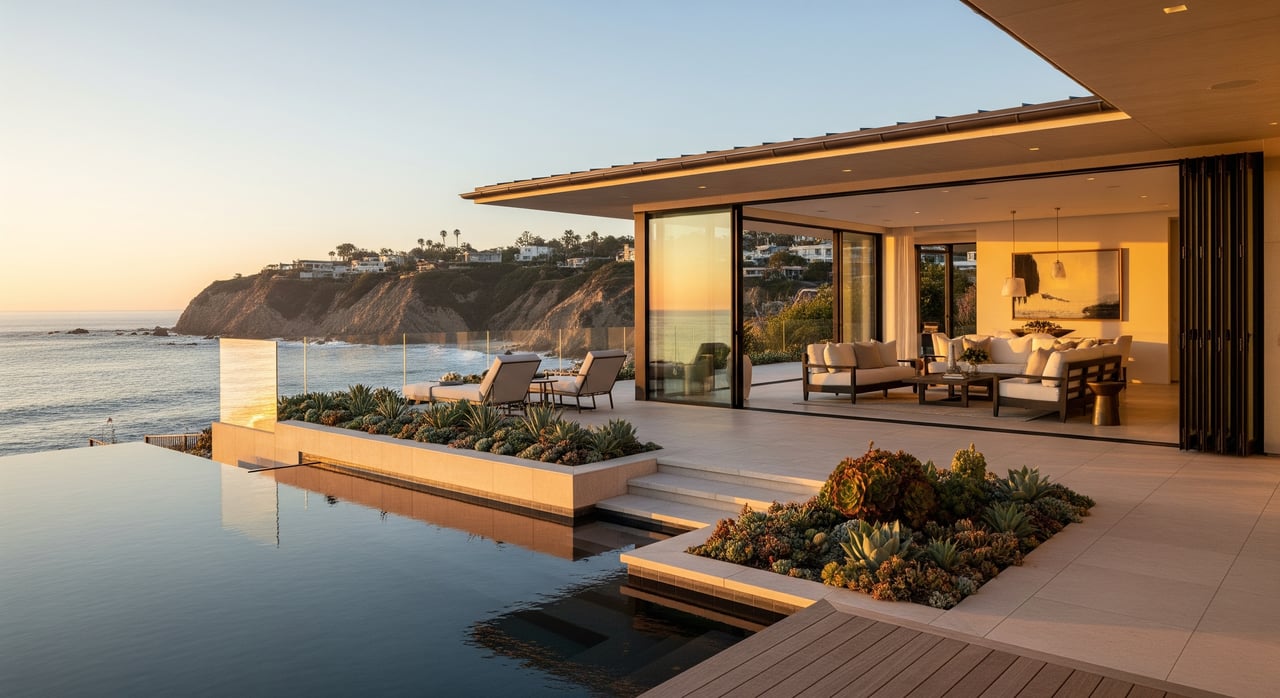
Laguna Beach has a smaller footprint with steep hillsides, coastal bluffs, and intimate coves. Custom architecture is common, and many homes are positioned for ocean or canyon views. New construction is limited, and zoning keeps supply in check.
- North Laguna: Coastal neighborhoods near coves and galleries, with a mix of cottages and custom homes.
- Bluebird Canyon and Top of the World: Hillside living with panoramic outlooks and winding streets.
- South Laguna: A range of coastal enclaves and hillside streets that emphasize privacy and scenery.
What to expect: scarcity premiums for well-located view properties and a measured pace of new supply.
Newport Beach: islands, harbors, and variety
Newport Beach offers distinct submarkets, each with its own product mix and lifestyle.
- Corona del Mar: Village living near shops and beaches, with a blend of cottages, new builds, and view properties.
- Newport Coast: Master-planned enclaves and estates, often with coastal panoramas.
- Balboa Island and Lido Isle: Unique island living and waterfront homes near marinas and dining.
- Eastbluff and West Newport: A mix of inland subdivisions, beach-close streets, and townhome or condo options.
What to expect: more choices across price tiers, including amenity-rich condos, townhomes, and waterfront estates.
Demand drivers and buyer profiles
Both cities attract full-time residents, second-home buyers, and high-net-worth purchasers. Lifestyle is the core driver. In Newport Beach, boating and marina access are major draws alongside village walkability and island neighborhoods. In Laguna Beach, the arts scene, coastal scenery, and hillside views lead.
Newport’s broader inventory often appeals to a wider profile, from families to downsizers and investors seeking condo or townhome product. Laguna’s limited supply and custom-home character often appeal to buyers seeking exclusivity, views, and a village atmosphere.
Regulations and ownership costs to factor
- Property taxes: Both cities share the county framework. The base tax rate is approximately 1 percent of assessed value, with parcel-level variations from local assessments or Mello-Roos where applicable. Always verify at the parcel level.
- Coastal development rules: Coastal permitting, bluff stability standards, setbacks, and public access requirements can affect remodels and rebuilds. Plan for added time and expert review.
- Insurance: Coastal exposures can increase premiums. Some properties may require flood insurance or face underwriting scrutiny due to erosion risk or bluff conditions. Check current availability and costs early in your process.
- Short-term rentals: Both cities regulate vacation rentals. Rules address registration, permitted locations, limits, and enforcement. Confirm municipal code requirements and HOA policies before modeling revenue.
The lesson: regulatory and insurance factors can influence both your total cost of ownership and your project timeline. Build these into your budget and closing timeline from day one.
How to choose your coastal fit
Ask a few practical questions to narrow your search:
- Product type: Do you prefer a custom single-family home with views, or a low-maintenance condo or townhome in an amenity-rich community?
- Lifestyle access: Is boating and marina life central to your plans, or do you prioritize arts, galleries, and scenic coves?
- Inventory tolerance: Do you want the widest set of choices, or are you comfortable focusing on limited, high-demand niches?
- Renovation appetite: Are you ready for coastal permitting and engineering considerations, or do you prefer newer or recent remodels?
- Holding period: Are you buying for long-term use and lifestyle, or for flexible use that may include seasonal stays and potential rental strategies within current rules?
Your answers will push you naturally toward certain neighborhoods and property types in each city.
Strategy playbook for buyers and sellers
Buyers: compete smartly without overreaching
- Define the segment. Choose your primary product type and price range, then track new listings weekly.
- Prepare your file. Have financing or funds lined up and be ready to move on a well-positioned property.
- Evaluate risk. Understand view premiums, hillside access, parking, flood zones, and potential insurance requirements.
- Read the micro-market. Measure days on market and list-to-sale patterns within your exact segment.
- Keep options open. Consider nearby submarkets that deliver the same lifestyle benefits with better availability.
Sellers: showcase strength and reduce friction
- Price to win your lane. Anchor your strategy to direct comps by product type, view quality, and recent upgrades.
- Address coastal specifics early. If applicable, gather permits, geological or seawall documentation, and HOA records before listing.
- Market to the right buyers. High-end coastal homes benefit from curated exposure to qualified local and international buyers.
- Optimize timing and presentation. Professional visuals, staging, and a launch timed to seasonal peaks can accelerate results.
What this means for you
Both Laguna Beach and Newport Beach have proven long-term resilience supported by constrained coastal supply and powerful lifestyle demand. The right choice depends on how you balance product type, day-to-day lifestyle, and your tolerance for inventory trade-offs. If you want broader selection, diverse condo and townhome options, and easy access to boating, Newport Beach often delivers. If you seek custom architecture, hillside and bluff views, and a smaller, arts-forward setting, Laguna Beach can be an excellent fit.
A tailored plan built around your goals will outperform a citywide average every time. The key is to segment the market correctly, verify regulatory and insurance details up front, and execute with precision.
Why partner with Christina Shaw Group
You deserve boutique, concierge guidance paired with global reach. Based in Newport Beach and focused on the coastal corridor, our team brings deep neighborhood intelligence across Newport Beach, Newport Coast, and Laguna Beach. We combine high-touch service with the international marketing power of a respected luxury brand, reaching qualified buyers across Orange County and overseas. We understand cross-border needs, relocation timelines, and the nuances of presenting and negotiating high-value coastal property.
Ready to outline your strategy or test the market with a private, data-backed plan? Connect with the Christina Shaw Group to Request a Private Valuation and explore curated options that match your goals.
FAQs
Which city is more expensive for single-family homes in coastal Orange County?
- Both are premium markets; Laguna Beach often shows higher typical prices for single-family view properties due to scarcity, while Newport Beach spans more tiers because of its larger, more diverse housing mix.
Which city is better for boating and marina access if that is my priority?
- Newport Beach is better known for harbor, marina, and island living, with neighborhoods oriented to boating and waterfront access.
Are inventories tight in both cities and will prices keep rising this year?
- Inventory is constrained along the coast; long-term resilience is supported by limited supply, but short-term prices depend on rates and month-to-month listing activity.
Can I buy a property for short-term rental use in Laguna Beach or Newport Beach?
- Both cities regulate short-term rentals; confirm municipal rules, permit availability, and HOA policies before underwriting income expectations.
Are coastal homes in Laguna Beach or Newport Beach at risk from erosion or flood?
- Some properties face flood or bluff-erosion exposure; verify FEMA zone status, coastal engineering factors, and insurance availability during due diligence.
How should I time a sale in Laguna Beach or Newport Beach for best results?
- Many coastal sellers target spring and summer for maximum visibility, but well-prepared, professionally marketed listings can attract strong offers year-round.